Deferring Capital Gains Tax: Strategies for Real Estate and Investment Portfolios
Deferring Capital Gains Tax: Strategies for Real Estate and Investment Portfolios
Navigating the complexities of capital gains tax can be a significant challenge for investors in both real estate and diversified portfolios. However, understanding and implementing strategic tax deferral methods can substantially impact your wealth accumulation and long-term financial health. This guide provides a comprehensive overview of popular and cutting-edge techniques for deferring capital gains tax, helping you keep more of your hard-earned profits invested and working for you.
Successfully managing capital gains isn't just about minimizing your immediate tax bill; it’s about optimizing your investment timeline and maximizing your returns over decades. Whether you're a seasoned real estate investor or a careful stock market participant, the principles of tax deferral offer powerful tools for smart financial planning.
Key Points:
- 1031 Exchange: A powerful tool for real estate investors to defer capital gains tax.
- Opportunity Zones: Incentivize long-term investments in designated low-income areas.
- Installment Sales: Spread capital gains recognition over multiple tax years.
- Retirement Accounts: Tax-advantaged vehicles like 401(k)s and IRAs defer gains.
- Charitable Remainder Trusts: Offer deferral while supporting philanthropic goals.
Understanding Capital Gains Tax and the Power of Deferral
Capital gains tax is levied on the profit you make from selling an asset that has appreciated in value. While it's a consequence of successful investing, proactive planning allows you to manage this tax burden effectively. The primary benefit of deferring capital gains tax is that it allows your capital to remain invested and potentially generate further returns, a concept known as compounding. This means your money grows tax-free until a later date, giving you a significant advantage. Our analysis suggests that even small deferrals can lead to substantial wealth differences over 10-20 years.
For a deeper dive into the fundamentals of capital gains, you might find our article on understanding capital gains tax insightful.
Strategies for Real Estate Capital Gains Tax Deferral
Real estate investors have several unique and highly effective avenues for deferring capital gains. These strategies often involve reinvesting proceeds into new properties or specific development projects.
The 1031 Exchange: A Cornerstone for Real Estate Investors
The 1031 exchange, also known as a like-kind exchange, is arguably the most recognized strategy for deferring capital gains tax on investment property. It allows an investor to sell one investment property and reinvest the proceeds into another "like-kind" property, deferring the capital gains tax until the new property is sold (and not replaced). The nuances of this exchange, including strict timelines for identifying and acquiring replacement properties (45 and 180 days, respectively), demand meticulous planning.
Recent IRS guidance in 2024 has reinforced the "like-kind" definition, emphasizing real property for real property exchanges. Many sophisticated investors are now leveraging Delaware Statutory Trusts (DSTs) within 1031 exchanges, offering fractional ownership in institutional-grade properties. This approach provides diversification and professional management, which can be a significant advantage over direct property ownership.
Opportunity Zones: Investing for Community and Tax Benefits
Created by the Tax Cuts and Jobs Act of 2017, Opportunity Zones offer a compelling way to defer capital gains tax by reinvesting them into designated economically distressed communities. Investors can defer or even reduce their initial capital gains tax liability by investing in Qualified Opportunity Funds (QOFs). The longer the investment is held, the greater the potential tax benefit:
- Temporary Deferral: Defer capital gains until December 31, 2026, or until the QOF investment is sold.
- Step-up in Basis: For investments held for at least 5 years, the basis of the original gain increases by 10%. After 7 years, it increases by another 5%, for a total 15% reduction.
- Exclusion of Future Gains: If the investment in the QOF is held for at least 10 years, any capital gains from the appreciation of the QOF investment itself can be entirely tax-exempt.
Expert financial planners often recommend evaluating Opportunity Zone investments not just for their tax benefits but also for their underlying economic viability and social impact. According to a Bloomberg Tax analysis from early 2025, QOFs have seen a resurgence in interest due to maturing initial deferral periods and the approaching 10-year hold window for maximum benefits.
Installment Sales: Spreading Out Your Tax Burden
An installment sale allows a seller to receive payments over more than one tax year. Instead of paying capital gains tax on the full profit in the year of sale, the tax is paid proportionally as payments are received. This can be particularly beneficial for large real estate transactions, spreading a potentially hefty tax bill over several years and possibly keeping you in a lower tax bracket each year. This strategy is simpler to implement than a 1031 exchange but doesn't offer full deferral, only an extended payment schedule.
Minimizing Capital Gains Tax on Investment Portfolios
Beyond real estate, various strategies can help you manage capital gains from stocks, bonds, and other securities within your investment portfolios.
Utilizing Tax-Advantaged Retirement Accounts
One of the most straightforward methods for deferring capital gains tax on investments is to utilize tax-advantaged retirement accounts like 401(k)s, IRAs, and Roth IRAs. Contributions to traditional 401(k)s and IRAs are often tax-deductible, and your investments grow tax-deferred until retirement. While Roth accounts don't offer an upfront deduction, qualified distributions in retirement are entirely tax-free, meaning any capital gains generated within the account are never taxed. This provides a powerful vehicle for long-term wealth accumulation.
Tax-Loss Harvesting: Turning Losses into Gains (or Reductions)
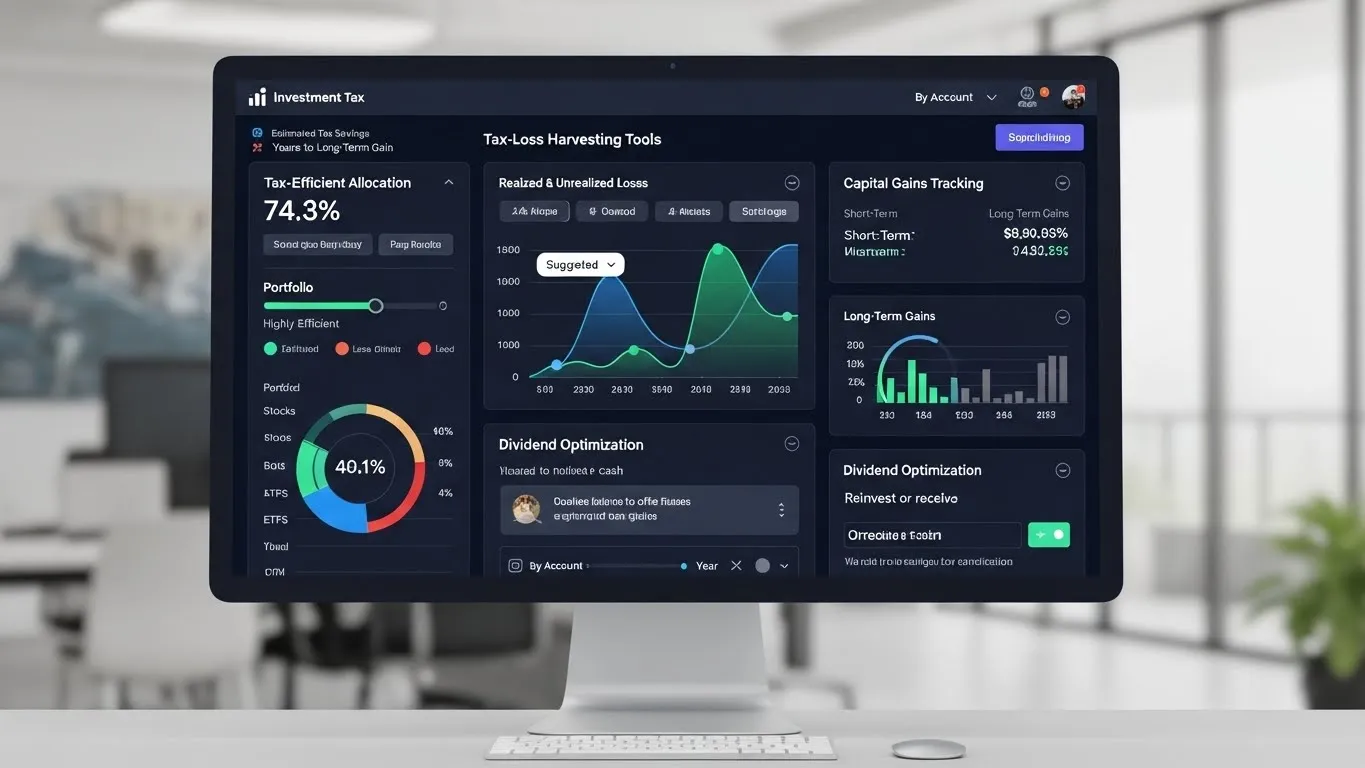
Tax-loss harvesting involves selling investments at a loss to offset capital gains realized elsewhere in your portfolio. You can offset short-term gains dollar-for-dollar and then use any remaining capital losses to offset up to $3,000 of ordinary income annually. Any excess losses can be carried forward indefinitely to offset future gains. This is a strategic move, often employed late in the tax year, to reduce your overall taxable income. Data from the National Bureau of Economic Research in 2023 highlighted the consistent effectiveness of systematic tax-loss harvesting in improving after-tax returns for long-term investors.
Charitable Remainder Trusts (CRTs): Blending Philanthropy and Deferral
For individuals with highly appreciated assets and philanthropic goals, a Charitable Remainder Trust (CRT) offers an elegant solution. You transfer appreciated assets (like real estate or stock) into an irrevocable trust. The trust then sells the asset, avoiding immediate capital gains tax for you. The trust provides you (or other non-charitable beneficiaries) with an income stream for a specified term or life, and the remaining assets eventually go to a charity. This strategy allows you to defer capital gains tax, receive an immediate charitable deduction, and generate income, all while supporting a cause you care about.
Differentiated Insights and Latest Trends in Tax Deferral
The landscape of tax deferral is constantly evolving, with new interpretations and innovative financial products emerging.
- Synergistic Strategy: Combining 1031s with Deferred Sales Trusts (DSTs): While not widely advertised, some investors are exploring the use of a Deferred Sales Trust (DST) as a "backup plan" or an alternative to a traditional 1031 exchange. A DST allows you to sell appreciated real estate, deferring the capital gains tax into an installment sale note held by the trust, without the strict "like-kind" property replacement rules. This offers greater flexibility in asset allocation post-sale. For example, if a suitable 1031 replacement property isn't found, transitioning to a DST can still defer the gain, allowing for diversification into other asset classes, albeit with an eventual tax obligation. This offers a valuable alternative for real estate investors seeking more control over their proceeds.
- Navigating ESG and Impact Investing with Deferral: A growing trend involves aligning capital gains deferral strategies with Environmental, Social, and Governance (ESG) or impact investing principles. For instance, Qualified Opportunity Funds are inherently aligned with social impact. Additionally, investors can structure CRTs to invest in ESG-compliant portfolios, ensuring their deferred capital continues to support responsible investing. This trend, noted in a 2024 report by the Global Impact Investing Network, highlights how investors are increasingly seeking to optimize both their financial and ethical returns. We believe that integrating ESG criteria into tax-deferred investment decisions will become a standard practice for forward-thinking investors.
Frequently Asked Questions About Capital Gains Tax Deferral
Q: Is deferring capital gains tax always the best financial move? A: Not always. While deferral keeps more money invested, it simply postpones the tax. You should consider your future income, potential changes in tax laws, and estate planning goals. Sometimes, paying the tax now at a lower rate might be more advantageous than deferring it to a point where your income or future tax rates are higher. Consult a tax professional to assess your specific situation.
Q: What are the primary risks associated with 1031 exchanges? A: The main risks involve the strict timelines for identification (45 days) and acquisition (180 days) of replacement properties. Failure to meet these deadlines can result in a failed exchange, making the original capital gains immediately taxable. Market fluctuations and the availability of suitable "like-kind" properties also pose challenges. Thorough due diligence and a reliable qualified intermediary are crucial.
Q: Can I defer capital gains on the sale of my primary residence? A: Generally, no, not in the same way as investment properties. However, homeowners can exclude a significant portion of capital gains from the sale of their primary residence. If you've lived in the home for at least two of the last five years, you can exclude up to $250,000 of gain ($500,000 for married couples filing jointly). This isn't a deferral, but an outright exclusion, which is often even better.
Q: How do changes in tax law affect deferral strategies? A: Tax laws are subject to change by Congress, which can significantly impact deferral strategies. For example, the sunset of certain Opportunity Zone benefits or modifications to 1031 exchange rules could alter their effectiveness. Staying informed about current and proposed tax law changes and updates is crucial for long-term tax planning. Always consult a tax advisor to understand the latest implications for your investments.
Conclusion: Strategic Wealth Preservation Through Tax Planning
Deferring capital gains tax is a powerful lever for enhancing investment returns and preserving wealth over the long term. From sophisticated real estate exchanges to strategic portfolio management and philanthropic giving, a range of tools exists to help investors mitigate their immediate tax burden. The key is to develop a personalized, forward-looking strategy that aligns with your financial goals and risk tolerance.
We encourage you to consult with a qualified financial advisor and tax professional to explore which of these strategies are best suited for your unique circumstances. Proactive tax planning is not just about compliance; it's about smart financial engineering.
Extended Reading Suggestions for Future Updates:
- Understanding the Role of Qualified Intermediaries in 1031 Exchanges: A detailed look at the selection process, responsibilities, and critical considerations when working with a QI.
- Estate Planning with Deferred Capital Gains: A Holistic Approach: Exploring how strategies like CRTs and tax-advantaged accounts integrate with broader estate planning objectives.
- The Future of Capital Gains Taxation: Predicted Policy Changes and Investor Preparedness: An analysis of potential legislative shifts and how investors can adapt their strategies.